
In today’s digital age, LED computer monitors have become essential tools for both work and play. Offering vibrant colors and sharp images, these monitors enhance the overall viewing experience, making everything from graphic design to gaming more enjoyable. As technology continues to evolve, LED monitors are not just a luxury; they’re a necessity for anyone looking to boost productivity or immerse themselves in high-quality visuals.
With energy efficiency and durability as key features, LED monitors stand out in a crowded market. They provide users with a reliable option that saves on electricity bills while delivering impressive performance. Whether someone is a professional seeking precision or a casual user enjoying movies and games, understanding the benefits of LED monitors can help make informed decisions that elevate their computing experience.
Overview of LED Computer Monitors
LED computer monitors utilize light-emitting diodes (LEDs) for backlighting, providing enhanced brightness and color accuracy compared to traditional monitors. These monitors feature slim designs that save space while delivering high-resolution visuals, making them popular among both professionals and everyday users.
LED monitors offer various screen sizes, catering to diverse working environments and personal setups. Options range from compact 21-inch screens suitable for small desks to expansive 34-inch ultrawide displays ideal for immersive experiences.
Color reproduction stands out with LED technology, as it covers a wider color gamut. This feature proves essential for graphic designers, photographers, and developers who require precise color matching. Most LED monitors also include features like adaptive sync technology, reducing screen tearing during fast-paced activities such as gaming.
Energy efficiency represents another significant advantage. LED monitors consume less power compared to their LCD or CRT counterparts, leading to lower energy bills and reduced environmental impact. Many models comply with Energy Star standards, ensuring they operate within energy-efficient parameters.
Durability is another key characteristic. The LED technology has a longer lifespan than traditional displays, typically lasting up to 30,000 hours or more. This robustness translates into less frequent replacements, making it a cost-effective choice for users.
Overall, LED monitors provide an optimized visual experience, combining vibrant images, energy efficiency, and durability, all of which enhance productivity and enjoyment in digital tasks.
Advantages of LED Technology
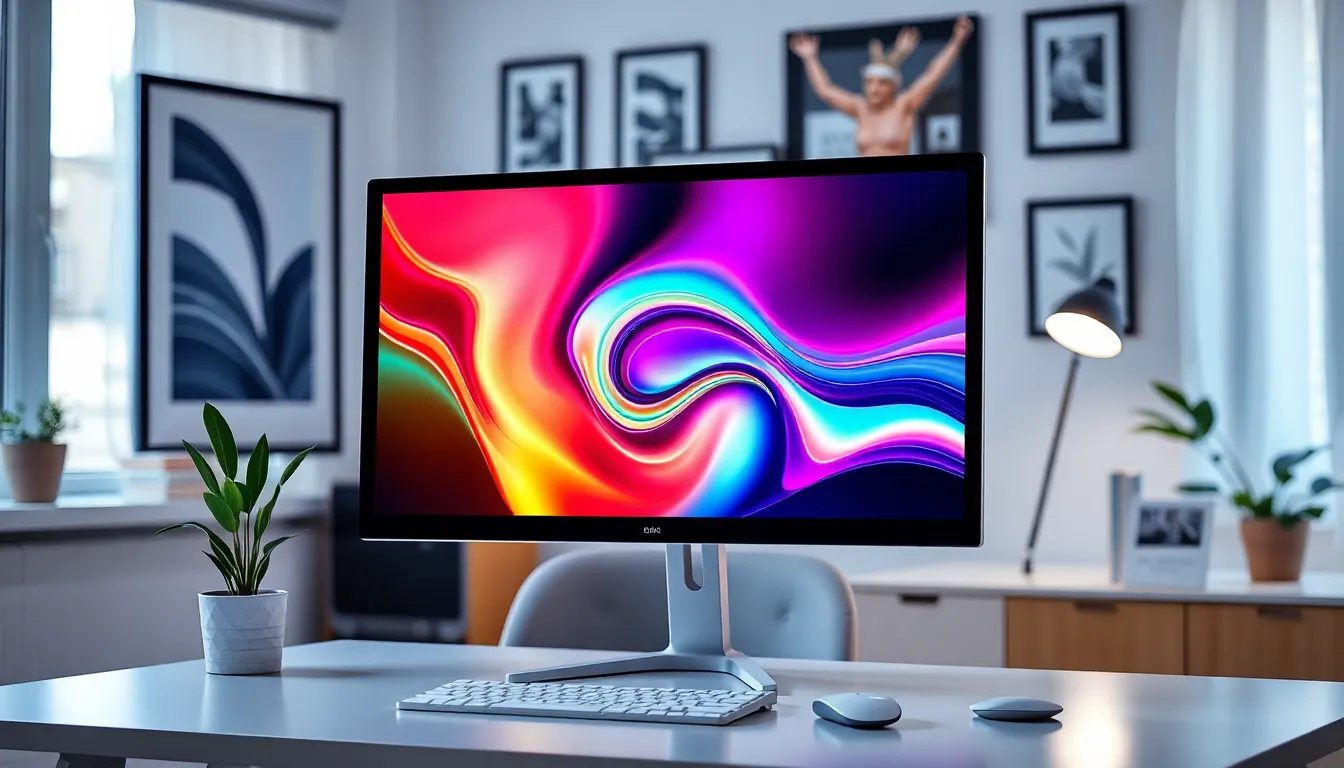
LED technology offers multiple benefits that enhance user experiences, primarily in energy efficiency and visual quality.
Energy Efficiency
Energy efficiency stands as a primary advantage of LED monitors. These monitors consume significantly less power than their LCD or CRT counterparts, often using up to 50% less energy. This reduction leads to lower electricity bills, facilitating cost savings over time. Their efficiency contributes to a smaller carbon footprint, making LED monitors a sustainable choice in an environmentally conscious market.
Brightness and Color Accuracy
Brightness and color accuracy emerge as key features of LED technology. LED monitors deliver brightness levels that often exceed 250 nits, providing clear visibility even in well-lit environments. Additionally, they support a wider color gamut, ensuring accurate color reproduction crucial for professionals in graphic design, photography, and digital content creation. This precision enhances visual experiences, making tasks like gaming or video editing more engaging and lifelike.
Types of LED Monitors
LED monitors come in various types, each offering unique features and benefits tailored to different user needs. Two prominent types include edge-lit and full-array LED monitors.
Edge-Lit LED Monitors
Edge-lit LED monitors utilize LEDs positioned along the edges of the screen. This design allows for thinner, more lightweight displays. Edge-lit monitors provide adequate brightness and color accuracy, making them suitable for regular tasks like browsing and office work. However, they may struggle with uniform brightness across the screen. Users seeking a sleek design without a significant impact on quality might choose edge-lit LED monitors for their aesthetic appeal and space-saving capabilities.
Full-Array LED Monitors
Full-array LED monitors feature a grid of LEDs behind the entire screen, enabling more precise control over backlighting. This structure enhances contrast and improves black levels, resulting in deeper, richer colors. Full-array monitors excel in professional settings, especially for graphic design, video editing, and gaming, where color fidelity and detail are critical. Local dimming capabilities further enhance performance by adjusting backlight intensity based on on-screen content. Users prioritizing superior visual experiences typically prefer full-array LED monitors for their advanced display technology and overall image quality.
Key Features to Consider
When selecting an LED computer monitor, several key features significantly impact user experience and performance. Understanding these features helps in making an informed decision.
Resolution and Screen Size
Resolution determines image clarity and detail, with common options including Full HD (1920 x 1080), Quad HD (2560 x 1440), and Ultra HD (3840 x 2160). Higher resolution monitors provide sharper images, which benefit graphic design, gaming, and video editing tasks. Screen size varies, typically ranging from 21 to 34 inches, accommodating both small workspaces and expansive setups. An ideal size aligns with viewing distance; larger screens require more distance for optimal visual comfort.
Refresh Rate and Response Time
Refresh rate, measured in Hertz (Hz), indicates how often a monitor refreshes images per second. Common rates include 60Hz for standard use and 144Hz or higher for gaming. Higher refresh rates yield smoother visuals, particularly in fast-paced scenarios. Response time, measured in milliseconds (ms), reflects how quickly a pixel changes color. Lower response times, ideally 1ms to 5ms, reduce motion blur, enhancing clarity during gaming and action-packed videos. Together, these elements ensure a seamless and engaging visual experience.
Popular Brands and Models
Several brands dominate the LED computer monitor market, offering a range of models tailored to various user needs. Notable brands include:
- Dell: Known for reliability and performance, Dell monitors feature the UltraSharp series, which provides excellent color accuracy and ergonomic designs. The Dell UltraSharp U2720Q offers 27 inches of 4K resolution, ideal for designers.
- LG: Leading in innovative display technology, LG’s UltraFine series caters to creative professionals. The LG 27UK850, a 27-inch 4K monitor, delivers HDR support and USB-C connectivity for enhanced versatility.
- Asus: Recognized for gaming monitors, Asus produces the ROG Swift series. The Asus ROG Swift PG259QN stands out with a 360Hz refresh rate, making it perfect for competitive gamers seeking smooth performance.
- Samsung: Prominent for stunning displays, Samsung offers curved monitors like the Odyssey G7. This 27-inch monitor features QLED technology, providing vibrant colors and immersive gaming experiences.
- Acer: Known for its budget-friendly options, Acer’s Predator series delivers quality at accessible prices. The Acer Predator XB273U offers 27 inches of 1440p resolution, balancing performance and affordability.
- BenQ: Focused on eye care, BenQ monitors emphasize comfort and visual quality. The BenQ PD3220U, a 32-inch 4K monitor, features features tailored for designers, including accurate color reproduction and ergonomic ergonomics.
- HP: Offering both performance and style, HP’s Elite series includes models like the HP EliteDisplay E273q. This 27-inch monitor balances sharp visuals and versatile connectivity options.
Model specifications often highlight unique features valuable for different user scenarios. For instance:
| Brand | Model | Screen Size | Resolution | Refresh Rate | Special Features |
|---|---|---|---|---|---|
| Dell | UltraSharp U2720Q | 27 inches | 3840 x 2160 | 60Hz | Excellent color accuracy |
| LG | UltraFine 27UK850 | 27 inches | 3840 x 2160 | 60Hz | HDR support, USB-C connectivity |
| Asus | ROG Swift PG259QN | 24.5 inches | 1920 x 1080 | 360Hz | G-Sync support |
| Samsung | Odyssey G7 | 27 inches | 2560 x 1440 | 240Hz | Curved QLED display |
| Acer | Predator XB273U | 27 inches | 2560 x 1440 | 144Hz | Adaptive sync technology |
| BenQ | PD3220U | 32 inches | 3840 x 2160 | 60Hz | Comprehensive color gamut |
| HP | EliteDisplay E273q | 27 inches | 2560 x 1440 | 60Hz | Versatile connectivity |
These brands and models cater to various user preferences, making it easier for individuals and professionals to find a suitable LED monitor for their specific needs.
LED computer monitors have become indispensable in both professional and personal settings. Their vibrant colors and sharp images elevate tasks from graphic design to gaming, making every visual experience more engaging. With energy efficiency and durability, these monitors not only help save on electricity costs but also offer long-lasting performance.
The variety of sizes and features available ensures there’s an LED monitor for every user, whether for casual browsing or intensive work. As technology advances, LED monitors continue to set the standard for quality and efficiency, proving to be a wise investment for anyone looking to enhance their digital experience.