In today’s digital age, a strong and reliable Wi-Fi connection is essential for everything from streaming movies to working from home. However, many households struggle with dead zones where the signal just won’t reach. This is where Wi-Fi range extenders come into play, offering a simple solution to boost connectivity throughout the home.
Wi-Fi range extenders work by amplifying your existing signal, allowing devices to connect in areas that were once out of reach. With the right extender, users can enjoy seamless internet access in every corner of their space. Understanding how these devices function and choosing the right one can make all the difference in creating a fully connected environment.
Overview Of Wifi Range Extenders
Wi-Fi range extenders increase wireless coverage in homes by amplifying existing signals. These devices pick up the primary Wi-Fi signal from a router and rebroadcast it, extending the reach of internet access. Users often face dead zones due to obstacles or distance from the router, making extenders vital for maintaining connectivity in larger spaces.
When choosing a Wi-Fi range extender, several specifications matter, including speed, frequency bands, and compatibility with existing routers. Extenders typically offer dual-band capabilities, with simultaneous connections on 2.4 GHz and 5 GHz frequencies. This feature allows devices like smartphones, laptops, and smart TVs to connect seamlessly across different bands.
Installation processes vary among extenders, but many support user-friendly setups through mobile apps or web interfaces. Some models incorporate smart technology, automatically finding optimal locations for effective coverage. Understanding the placement of extenders becomes essential; positioning them halfway between the router and the dead zones ensures maximum signal strength and performance.
In addition to standard extenders, powerline adapters also provide solutions by transmitting internet signals through electrical wiring. This alternative can be helpful in instances where installing an extender would be impractical due to structural barriers or layout challenges.
Wi-Fi range extenders offer an effective solution for enhancing internet connectivity throughout homes, catering to various needs and preferences for reliable performance.
How Wifi Range Extenders Work
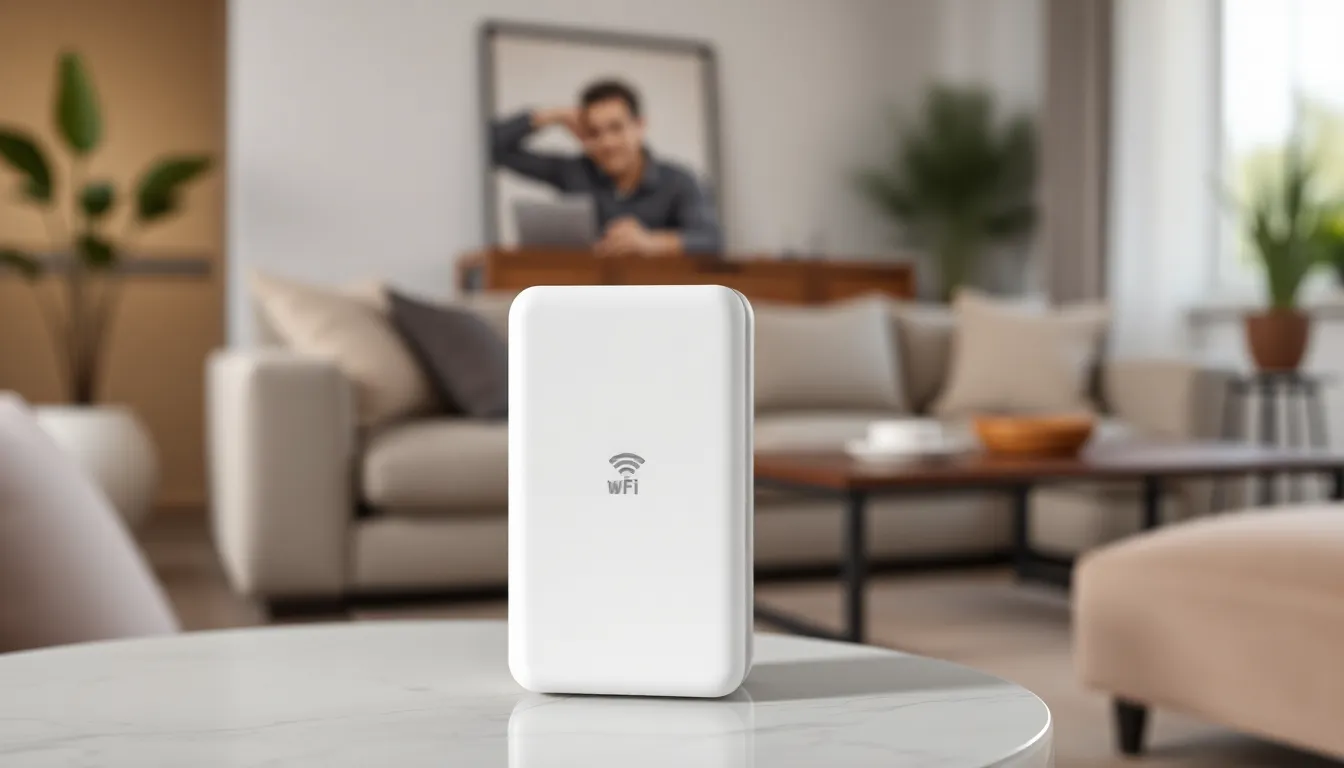
Wi-Fi range extenders amplify existing Wi-Fi signals, significantly improving overall connectivity. They address dead zones by receiving the primary signal from a router and rebroadcasting it, ensuring robust coverage in expansive spaces.
Signal Boosting Mechanism
Signal boosting occurs through a simple yet effective process. Wi-Fi extenders receive the original signal transmitted by a router, then amplify and retransmit it. They operate on various frequency bands, boosting both 2.4 GHz and 5 GHz signals, which aids in reducing interference and increasing speed in different areas of a home. This dual-band capability allows devices to connect at optimal speeds, enhancing overall internet experience. Proper placement of extenders is crucial; positioning them midway between the router and the dead zone maximizes coverage efficiency.
Types Of Wifi Range Extenders
Several types of Wi-Fi range extenders cater to different user needs. The main categories include:
- Traditional Extenders: These connect wirelessly to the router. They increase coverage but may slow down speeds due to the extended distance from the router.
- Powerline Adapters: These use electrical wiring to transmit data. They excel in environments with thick walls, where traditional extenders struggle.
- Mesh Wi-Fi Systems: Composed of multiple units that work together as one network, they provide seamless coverage without speed loss, eliminating dead zones effectively.
- Plug-In Extenders: These compact models plug directly into wall outlets for easy installation and offer a convenient way to boost signals in smaller areas.
Choosing the right type of extender depends on individual needs, environment, and specific usage scenarios.
Benefits Of Using Wifi Range Extenders
Wi-Fi range extenders offer several significant advantages, enhancing the wireless experience within a home. These benefits include improved coverage and enhanced internet speed.
Improved Coverage
Wi-Fi range extenders increase wireless coverage by eliminating dead zones, ensuring reliable connectivity throughout larger spaces. By receiving the primary Wi-Fi signal and rebroadcasting it, they expand the network’s reach into every corner of the home, even in hard-to-reach areas like basements and attics. This capability is crucial for users with multiple floors or sprawling layouts. Extenders effectively minimize the impact of physical obstructions, such as walls and furniture, which usually weaken the Wi-Fi signal.
Enhanced Internet Speed
Wi-Fi range extenders also contribute to enhanced internet speed, especially in areas previously plagued by weak signals. They amplify existing signals and reduce lag, allowing devices to experience faster connection speeds, which is essential for activities like streaming, gaming, and video conferencing. Many dual-band extenders manage traffic efficiently between devices by redistributing bandwidth, thus optimizing internet performance. Improved speed translates to smoother online experiences, benefiting multiple users simultaneously, whether they are working, streaming, or browsing.
Key Features To Consider
Selecting the right Wi-Fi range extender involves evaluating several key features. Each feature affects performance, usability, and overall satisfaction.
Compatibility
Ensure compatibility with existing routers. Most range extenders support various standards, including 802.11b/g/n/ac. Checking this compatibility helps avoid connection issues. Some extenders also offer universal compatibility, providing flexibility with different router brands.
Speed And Bandwidth
Consider the speed ratings of the extender. Models typically range from 300 Mbps to over 1,750 Mbps. Higher speeds often translate to better performance, particularly in high-demand situations. Examine the bandwidth capabilities; dual-band extenders transmit on both 2.4 GHz and 5 GHz frequencies, enhancing connectivity and reducing interference.
Ease Of Setup
Look for user-friendly installation processes. Many extenders offer straightforward setup through mobile apps or visual indicators. Some advanced models include WPS buttons for quick connections. A simpler setup process enhances user experience, reducing frustration during installation.
Popular Wifi Range Extender Models
Several models of Wi-Fi range extenders stand out due to their features and performance. Here’s a brief overview of some popular options:
TP-Link RE650
- Speed: Offers up to 2600 Mbps, supporting both 2.4 GHz and 5 GHz bands.
- Range: Covers large homes with up to 14,000 square feet of coverage.
- Features: Includes four Ethernet ports for wired connections and supports seamless roaming.
Netgear EX3700
- Speed: Provides up to 750 Mbps across dual bands.
- Range: Suitable for small to medium-sized homes.
- Features: Easy setup via the Nighthawk app and a compact design for flexible placement.
Linksys RE7000
- Speed: Delivers speeds up to 1.9 Gbps.
- Range: Effective coverage across a 10,000 square foot area.
- Features: Supports cross-band technology for simultaneous streaming and browsing.
D-Link DAP-1610
- Speed: Supports up to 750 Mbps, ideal for basic streaming and browsing.
- Range: Good for smaller homes and apartments.
- Features: Offers a simple setup with WPS and an LED signal indicator for optimal placement.
ASUS RP-AC1900
- Speed: Provides dual-band speeds up to 1.9 Gbps.
- Range: Ideal for larger homes with solid coverage.
- Features: Includes an Ethernet port for versatile connectivity and advanced security features.
Ubiquiti Amplifi HD
- Speed: Features a combined speed of up to 5 Gbps.
- Range: Built for extensive coverage, reaching up to 10,000 square feet.
- Features: Comes with a user-friendly mobile app for easy setup and management.
Repeater vs. Extender
When choosing between a repeater and an extender, consider that repeaters merely rebroadcast the signal, while extenders boost and amplify it for better coverage.
These popular models provide diverse options based on user needs, ensuring reliable Wi-Fi connectivity across various environments.
Wi-Fi range extenders are essential for anyone looking to eliminate dead zones and enhance their internet experience. By effectively amplifying existing signals they ensure that connectivity reaches every corner of the home. Choosing the right extender based on specific needs can lead to significant improvements in speed and coverage.
With various options available from traditional extenders to mesh systems users can find a solution that fits their environment. Ultimately investing in a quality Wi-Fi range extender can transform how individuals interact with technology at home making streaming gaming and video conferencing smoother and more enjoyable.